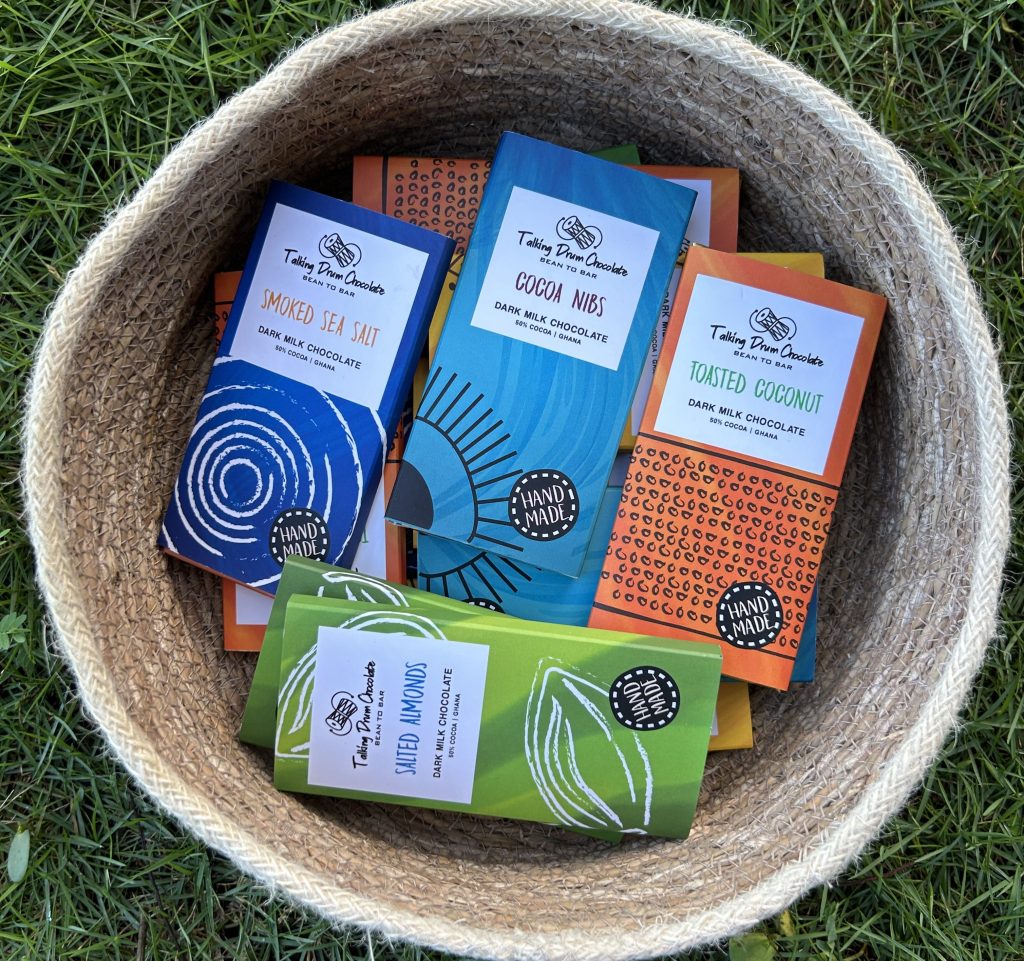
Farming is an integral part of the chocolate company. We are more than chocolate. We believe in addressing Africa’s fundamental problem of producing what it does not consume and consuming what it does not produce. We are here to try to change this narrative by increasing domestic consumption of “traditional cash crops”, change the agricultural narrative and export finished products instead of raw materials.
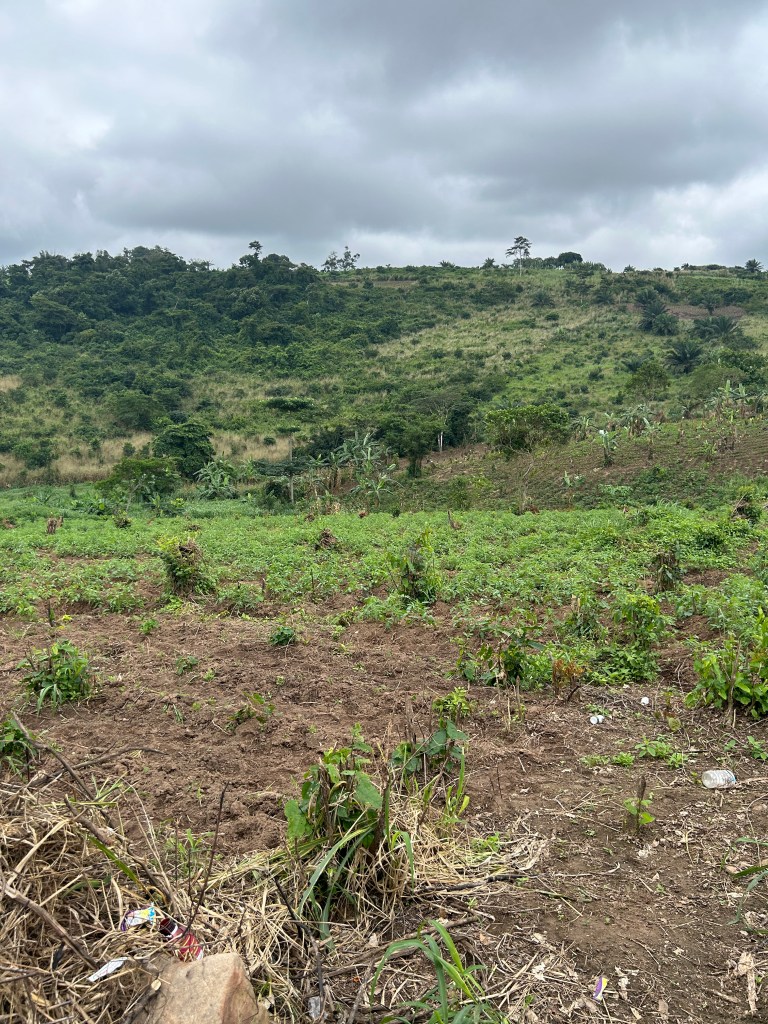
The farm has 4 main crops.
- COCOA: 3 acres of cocoa have been cultivated. Another one acre is planned in 2024. This farm will provide the beans for Talking Drum Chocolate.
- CASHEW: 2 acres of cashew trees have been cultivated for the purpose of carbon sequestration, processing of cashew apples into wine and/or jam. Nuts to be processed for vegan milk and cashew butter.
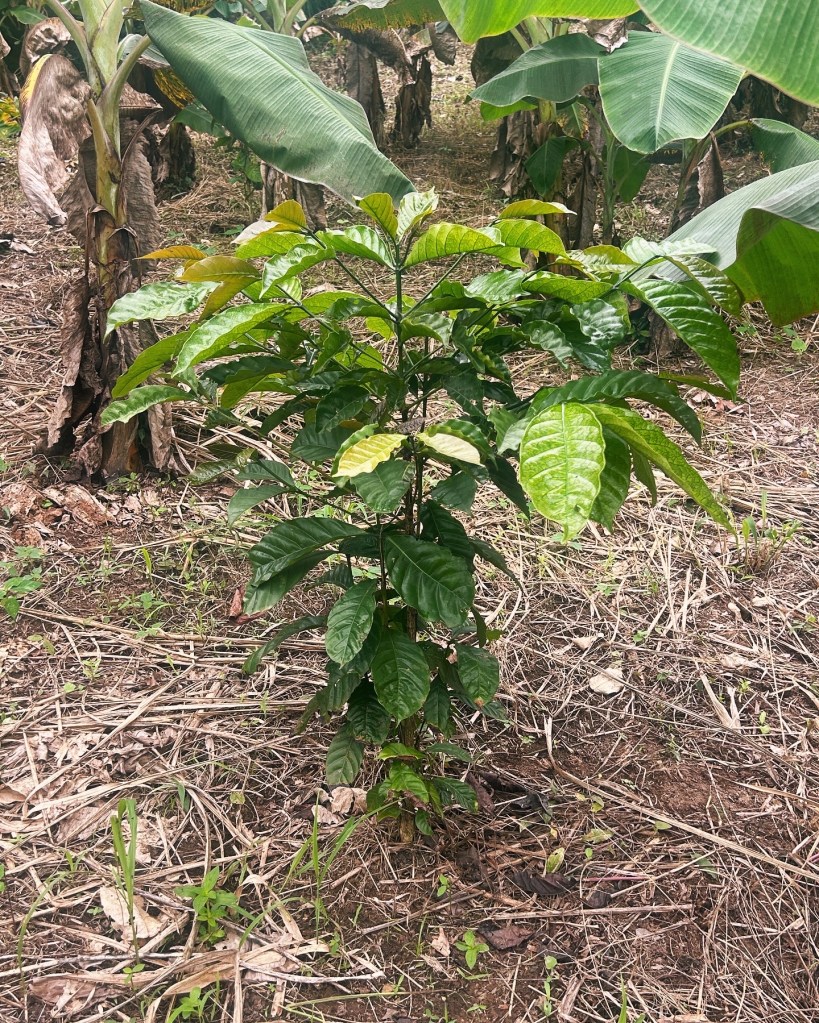
- COFFEE: 2 acre of coffee trees for processing of ground coffee.
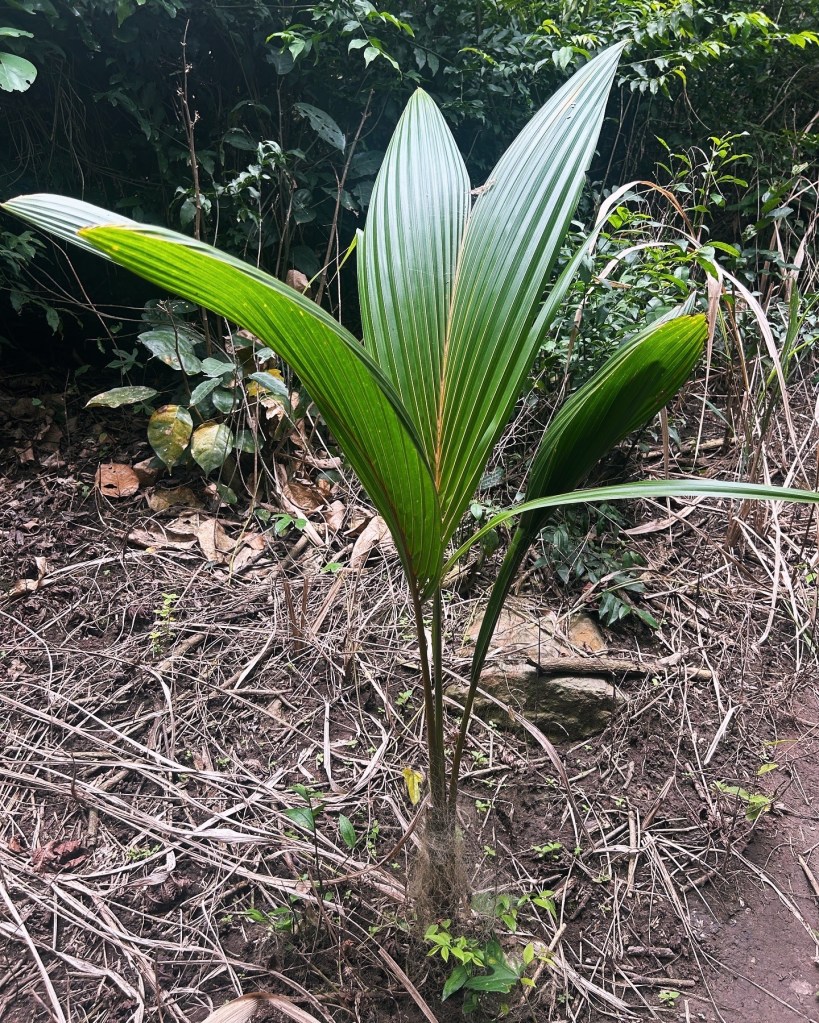
- COCONUT: 1 acre under cultivation around the borders of the farm. Coconuts to be processed into flakes for chocolate making and other baked products. Coconut oil and flour to be explored.
The farm is guided by 5 principles/concepts.
Concept 1: Processing in an essential component of 4C Farming.
- Important to change the narrative of a continent that thrives mainly on the export of raw materials.
- Well packaged products will be sold on the farm, retail shops and online orders.
- Value addition is key. Raw cocoa, nuts, fruits etc may be purchase directly on the farm via the farm shop but not from retail stores.
- Crops from nearby farms e.g. pineapples, chillies will be purchased and processed in our agricultural facility.
- Finished products will include: craft chocolate, wine, jams, condiments and other gourmet food products.
Processing therefore influences the choice of crops. If we cant process it, we wont grow it.
Concept 2: Sustainable Farming, Zero Wastage
- Principles of agro-ecology to be applied. There are already several forest trees on the farm and will be maintained.
- Grazing farm animals under trees provides manure and enrichens the soil. Farm animals will include chicken and goats.
- Diversify crops – grow a wide variety of fruit and vegetables. Biodiversity makes farming more resilient.
- Zero wastage – optimise food production, reduce water wastage, minimal/clean fertilizer, recycle, compost, etc
- Use clean energy as much as possible.

Concept 3: Smart Farming
- Use AI, sensors, drones, etc to monitor various conditions like soil moisture, water level, light, humidity, obstacles, and motion from anywhere.
- The main purpose is to create efficiencies in the use of resources and boost yield.
- Consistently learning and improving farming methods requires good data.
- The application of “tech” will promote sustainability and facilitate good business decisions.
- Building traceability system so that consumers can trace products to the farm.
- To bring the sexy back in farming. To create a smart enterprise that will be an attractive business enterprise for young people.
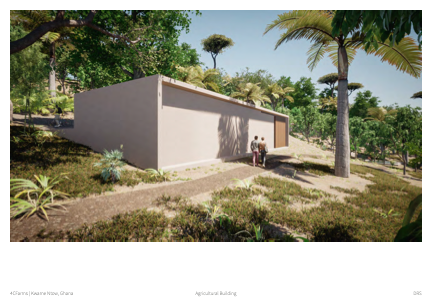
Concept 4: Agro-tourism
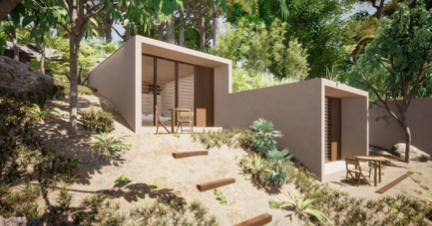
- We plan to offer retreats/weekend getaways for guests. Sources of inspiration: https://www.baris.co.zain South Africa and https://almatfarms.com.ng in Nigeria.
- A 4C Farm retreat includes: healthy farm-to-fork dining made by in-house chef, involvement of guests in harvesting and cooking; nature walks, hiking, swimming, fishing, cycling, picnics, etc.
- Music festivals held every quarter.
- Workshops: bean to bar chocolate making; farm to fork dining; Smart Farm methods.
Concept 5: Reinventing supply chain and building a community of growers
- Buying produce from nearby farms and processing them on 4C Farms provides the following advantages:
- It provides a direct market for farmers in the community
- It reduces their transportation costs to other markets
- It reduces carbon footprint
- It builds community
- The Eastern Region is a major pineapple growing area. Pineapples are mainly exported. Purchasing arrangements will be made to source pineapples for jams and craft beer.
 Talking Drum Chocolate